
Sayona West
Location, Access, Description
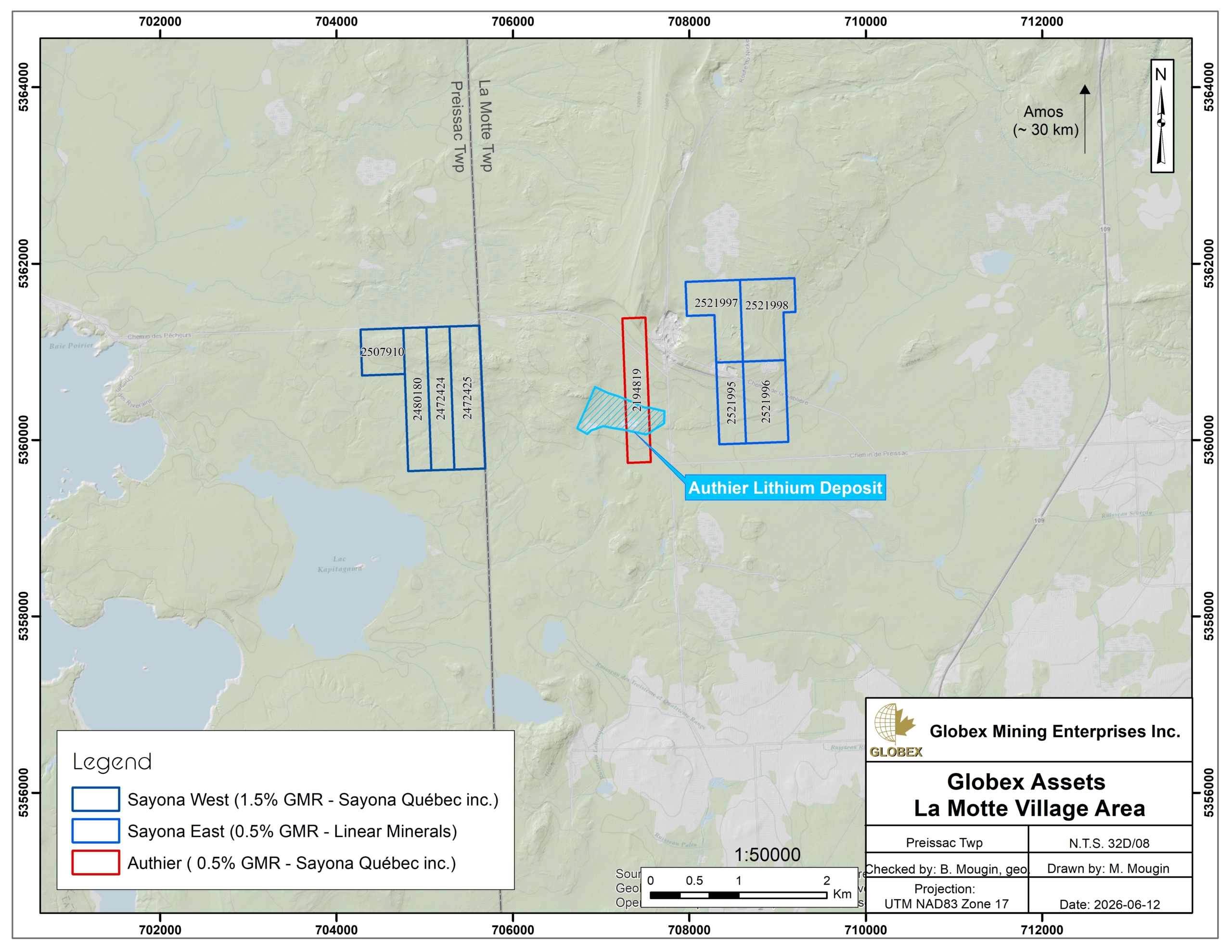
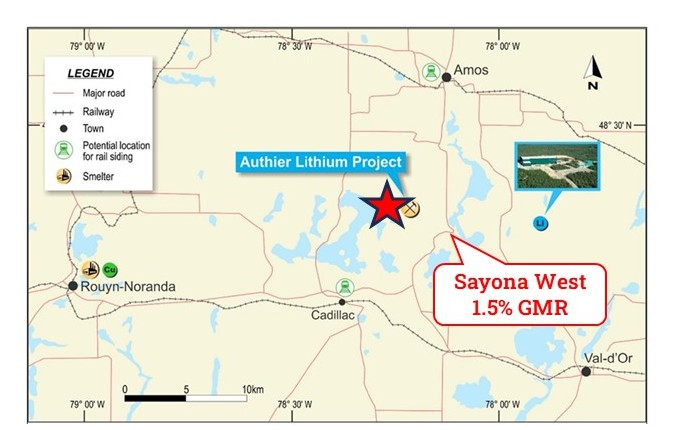
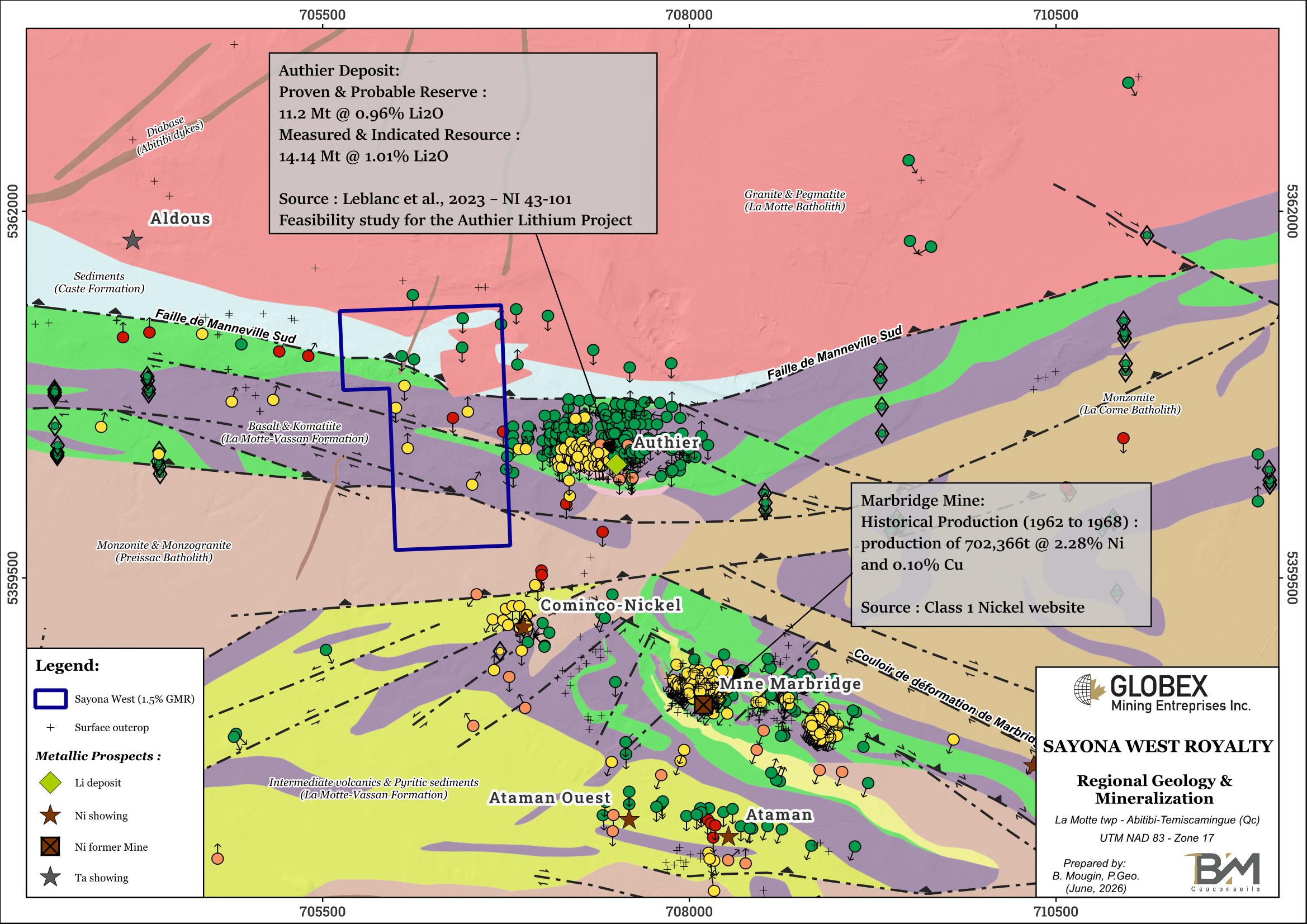
The Sayona West property consists of 4 mining claims covering an area of 145.67 Ha in La Motte township of Abitibi-Temiscamingue Region, in northwestern Quebec, approximately 25 km southwest of Amos (Qc) and 40 km northwest of Val-d’Or (Qc). The property is centred in a well- developed mining region with many resource industry support facilities and services. The towns of Rouyn-Noranda, Val-d’Or and Amos have populations of between 25,000 and 60,000 and are well known for their mining history.
The claims are part of the Authier Lithium Project of Sayona Quebec Inc. The Authier deposit hosts Proven and Probable Reserve of 11.2 Mt @ 0.96% Li2O, and Measured and Indicated Resource of 14.14 Mt @ 1.01% Li2O (Leblanc et al., 2023 – NI 43-101 Feasibility study for the Authier Lithium Project). Globex will a 1.5% Gross Metal Royalty (GMR) on any future production on these specific 12 claims. In addition, Globex will retain a 0.5% GMR on another claim of Sayona Quebec located further east (Authier property) that covers part of the current mineral reserves.
The project is readily accessible by national highway and a high-quality rural road network five kilometres east of the project site. Other infrastructure in close proximity to the project includes:
- The Canadian National Railway has an extensive rail network throughout Canada. The closest rail connecting to export shipping ports is at Cadillac, 20 kilometres to the south-west. The rail network connects to Montreal and Quebec City, and to the west through the Ontario Northland Railway and North American rail system;
- Quebec is a major producer of electricity as well as one the largest hydropower generators in the world. Green and renewable energy is well distributed through a reliable power network. Power will be accessed 5 kilometres to the east of the project site via an electricity grid supplied by low-cost hydro-electric power. The estimated maximum power level needed for the project in full operation is 7.5 MW; and
- Val d’Or is serviced several times daily by various airlines from Montreal.
Geology and Mineralization
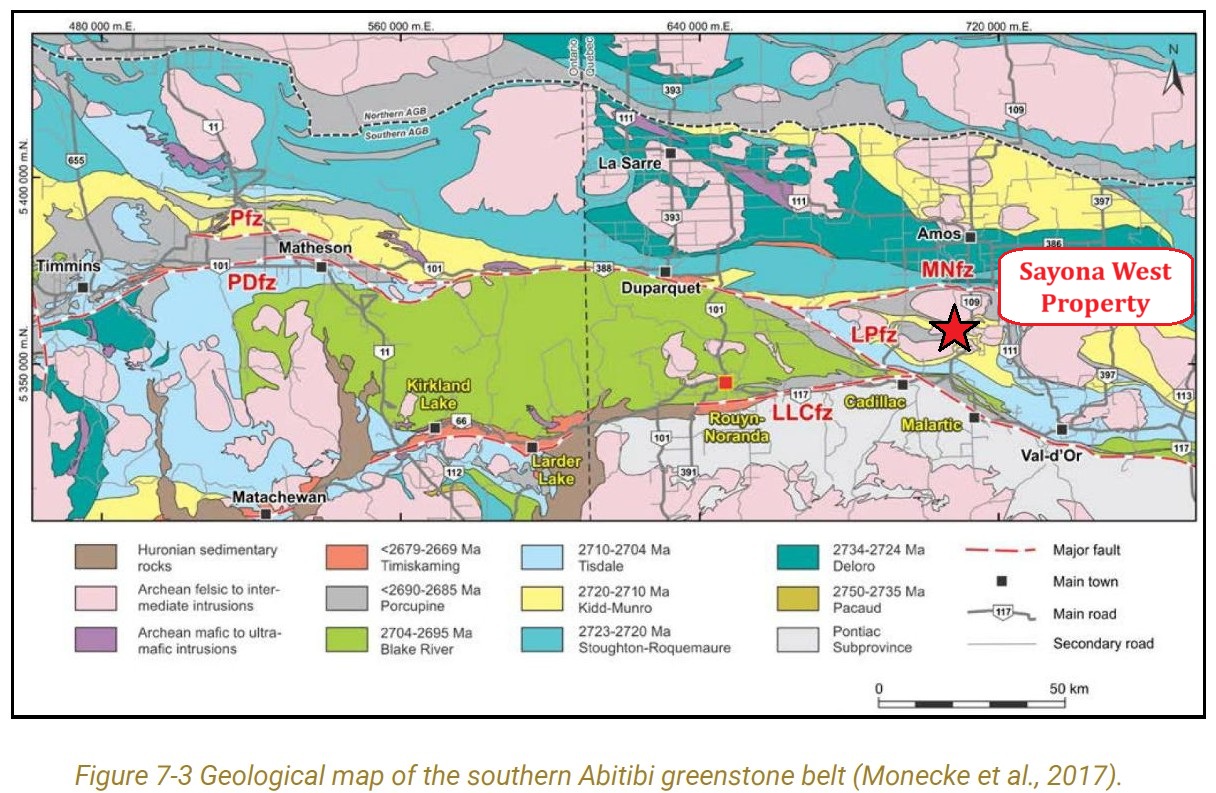
The Sayona West property is located within the Abitibi Subprovince of the Canadian Shield. The Abitibi Subprovince is an Archean greenstone belt which hosts some of the richest mineral deposits of the Superior Province.; it is divided into two distinct parts (Chown et al., 1992): the South Volcanic Zone (SVZ) and the North Volcanic Zone (NVZ), separated by the Destor-Porcupine-Manneville fault.
The property lies at the stratigraphic base of the Malartic Group (Dimroth et al., 1982) which extends from just north of the town of Val D’Or up to the Destor-Porcupine Tectonic Zone. The Malartic Group consists of a volcano-sedimentary assemblage characterised by the predominance of komatiitic and tholeiitic lava flows. It is divided in three formations which are from bottom to top: (1) the Lamotte-Vassan Formation, (2) the Dubuisson Formation, and (3) the Jacola Formation. This volcano-sedimentary assemblage is crosscut by pre to post-tectonic plutons and by NE-SW Proterozoic dykes.
Rocks of the area are squeezed between the Preissac, La Corne and La Motte batholiths. Rocks were strongly deformed and present evidences of a moderately east-dipping stretching lineation. The regional Manneville-Sud Fault runs through the Sayona West property in ESE orientation. The Marbridge shear zone is also associated with several Ni (±Cu ±EGP) prospects, including the Marbridge former mine (historical production of 703,027 tonnes grading 2.28% Ni for a total of 12,000 tonnes Ni and 543 tonnes Cu). The La Motte Anticline (Imreh, 1984) is an overturned fold inclined to the south. Regional metamorphism generally exhibits a green schist facies and can reach an amphibolite facies near large intrusions.
South of the Manneville-Sud Fault, the Sayona West property is underlain by intermediate intrusive rocks of the Preissac batholith and volcanics of the Lamotte-Vassan Formation (LVF). The LVF consists largely of komatiites with lesser intercalated basalts and minor felsic volcanoclastites and undifferentiated metasediments. This largely ultramafic sequence is intruded by three major batholiths (ET84-03; RG160; MM82-04) : the La Motte, Preissac and Lacorne Batholiths, respectively of monzogranitic, granitic and granodioritic compositions.
North of the Manneville-Sud Fault, the Sayona West property is mainly composed of granite and pegmatite of the La Motte Batholith which formed during the Archean (2.641 to 2.647 Ma) in the sedimentary rocks of the Kewagama Group, and more specifically in the metamorphosed sedimentary units (biotite schist) of the Caste Formation; the La Motte Batholith occupies the NE part of the Preissac-La Corne Plutonic Suite which is considered the source of lithium- and rare metals-bearing pegmatites.
The most valuable commodity present in the area is lithium, hosted within spodumene-bearing pegmatite intrusions. The reference deposit of the area is the Authier deposit which is located less than 1 km east of the property and hosts two separate mineralised pegmatite systems, including:
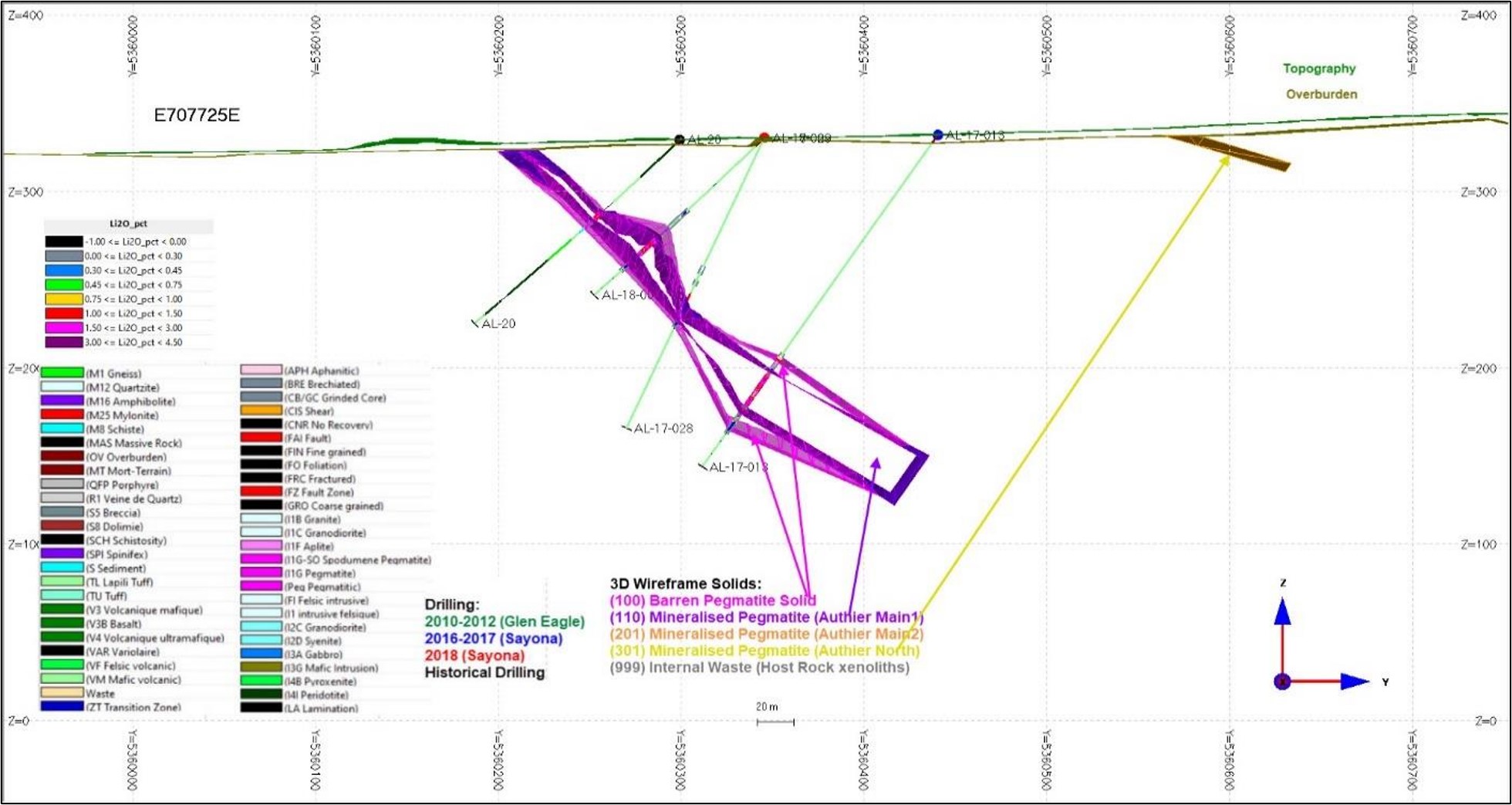
- Authier Main – 1,100 metres long striking east-west, with an average thickness of 25 metres (ranging from 4 metres to 55 metres), dipping 40 to 50 degrees to the north. The deposit outcrops in the eastern sector and then extends up to 10 metres under cover in the western sector. The deposit remains open in all directions; and
- Authier North – 500 metres long striking east-west, with an average thickness of 7 metres (ranging from 6 metres to 8 metres), dipping at 15 degrees to the north. The Authier North pegmatite appears at shallow levels (15 to 25 metres vertical depth). The deposit remains open in all directions.
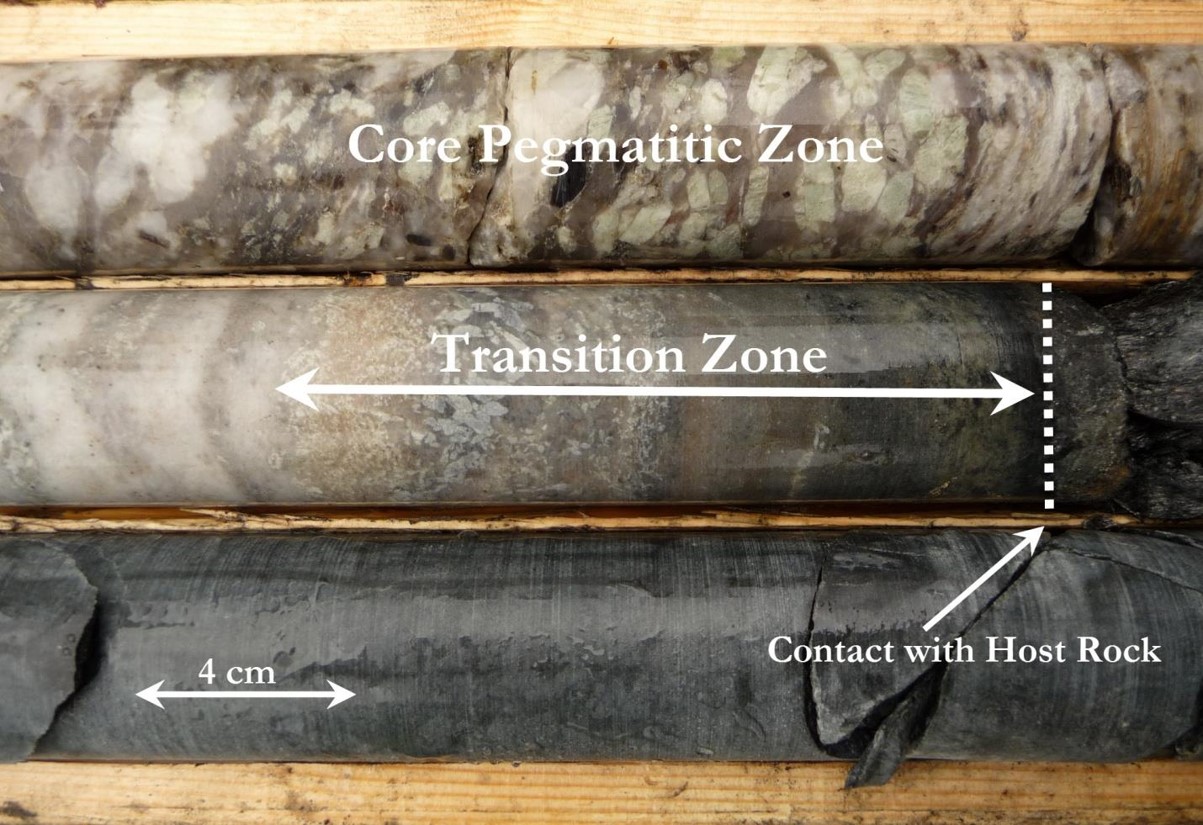
The lithium mineralisation at the Authier project is related to multiple pulses of spodumene bearing quartz-feldspar pegmatite. Higher lithium grades are related with high concentrations of mid-to-coarse spodumene crystals (up to 4 cm long) in a mid-to-coarse grained pegmatite facies :
History
Exploration for pegmatites in the Preissac-La Motte area began in the early 1900s; the presence of molybdenite was first reported in 1901 (Brett et al., 1976). The primary focus was initially on molybdenum. In 1942, the discovery of spodumene pegmatite at the site that would become the Québec Lithium Mine sparked interest in lithium. Exploration for lithium increased with the development of the Québec Lithium Mine in the 1950s and declined with the mine’s closure in 1965, partly due to falling prices and a declining market for the metal (Stone and Selway, 2009). In 1957, the discovery of the nickel deposit at the Marbridge Mine, which was mined from 1962 to 1967, sparked a boom in nickel (Brett et al., 1976). In the early 2000s, interest in lithium increased.
Recent work and developments :
The Authier Lithium project has more than 31,000 metres of diamond drilling. The project was initially drilled between 1991 and 1999 by Raymor Resources, and by Glen Eagle between 2010 and 2012, and Sayona has completed three phases of drilling totalling more than 11,000 metres. Holes were typically drilled perpendicular to the strike of the mineralised pegmatite to provide high confidence in the grade, strike and vertical extensions of the mineralisation.
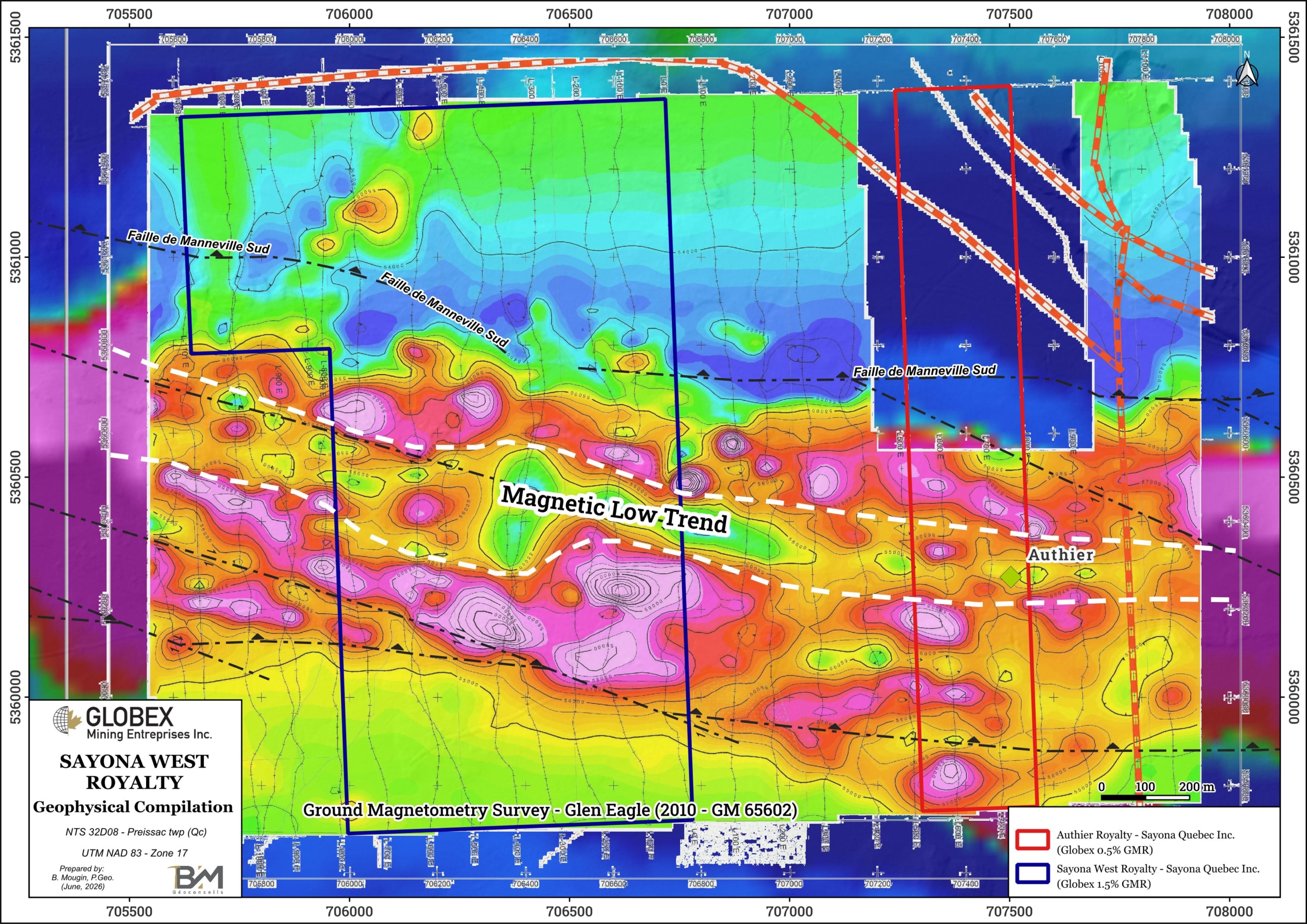
In 2010, Glen Eagle carried out ground magnetometry on the Authier property (GM 65602). Based on this magnetic data, it is possible to identify a weakly magnetic corridor associated with the Authier deposit; more lithium- and rare metals-bearing pegmatites may be hidden in the lateral extensions of this corridor.
The drilling performed by Sayona since acquiring the Authier Property from Glen Eagle is 81 holes for 11,367.5 m :
- Phase 1 program in October/November 2016 of 18 holes, totalling 3,967 m. Following the drilling program, Sayona completed an upgrade of the resource and completed a Prefeasibility Study, dated February 2017;
- Phase 2 diamond drilling program in May 2017 of 31 holes totalling 4,117 m;
- Phase 3 diamond drilling program in November/December 2017, which comprised seven diamond holes (PQ and HQ) for 769.5 m and the collection of five tonnes of core for pilot metallurgical testing; January / March 2018, which comprised 19 holes, NQ diameter, totalling 2,170.45 m; April 2018, involving condemnation drilling, six holes, NQ diameter, for 342.65 m.
JORC Mineral Resource
In 2023, Sayona Mining Ltd. (now Sayona Quebec Ltd.) released a positive NI 43-101 Feasibility Study for the Authier Lithium Project (Leblanc et al., 2023). Estimation of Mineral Resource and Reserve are presented in tables below :
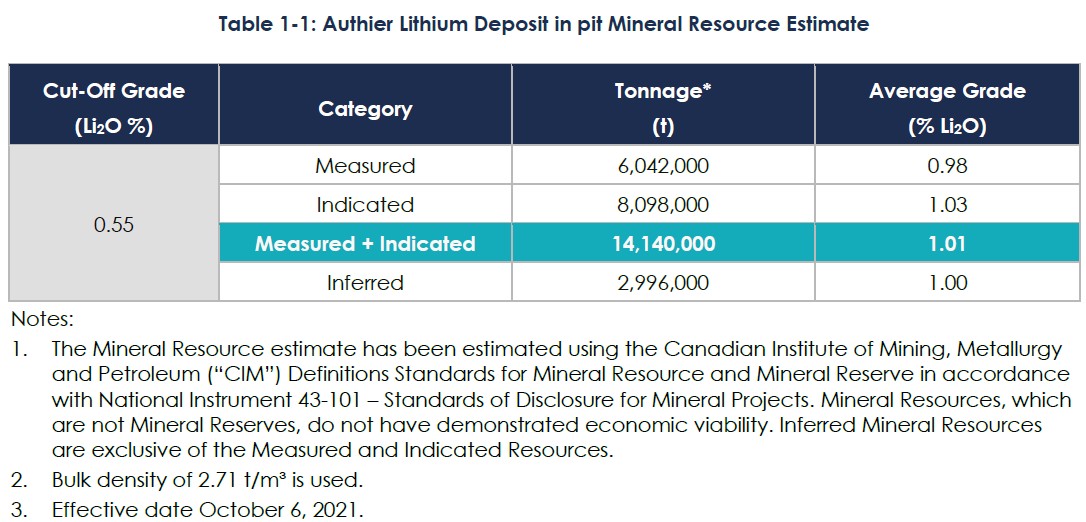
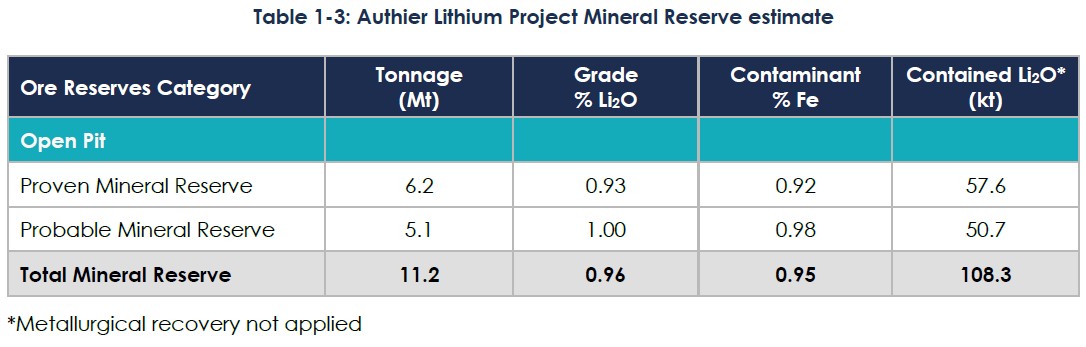
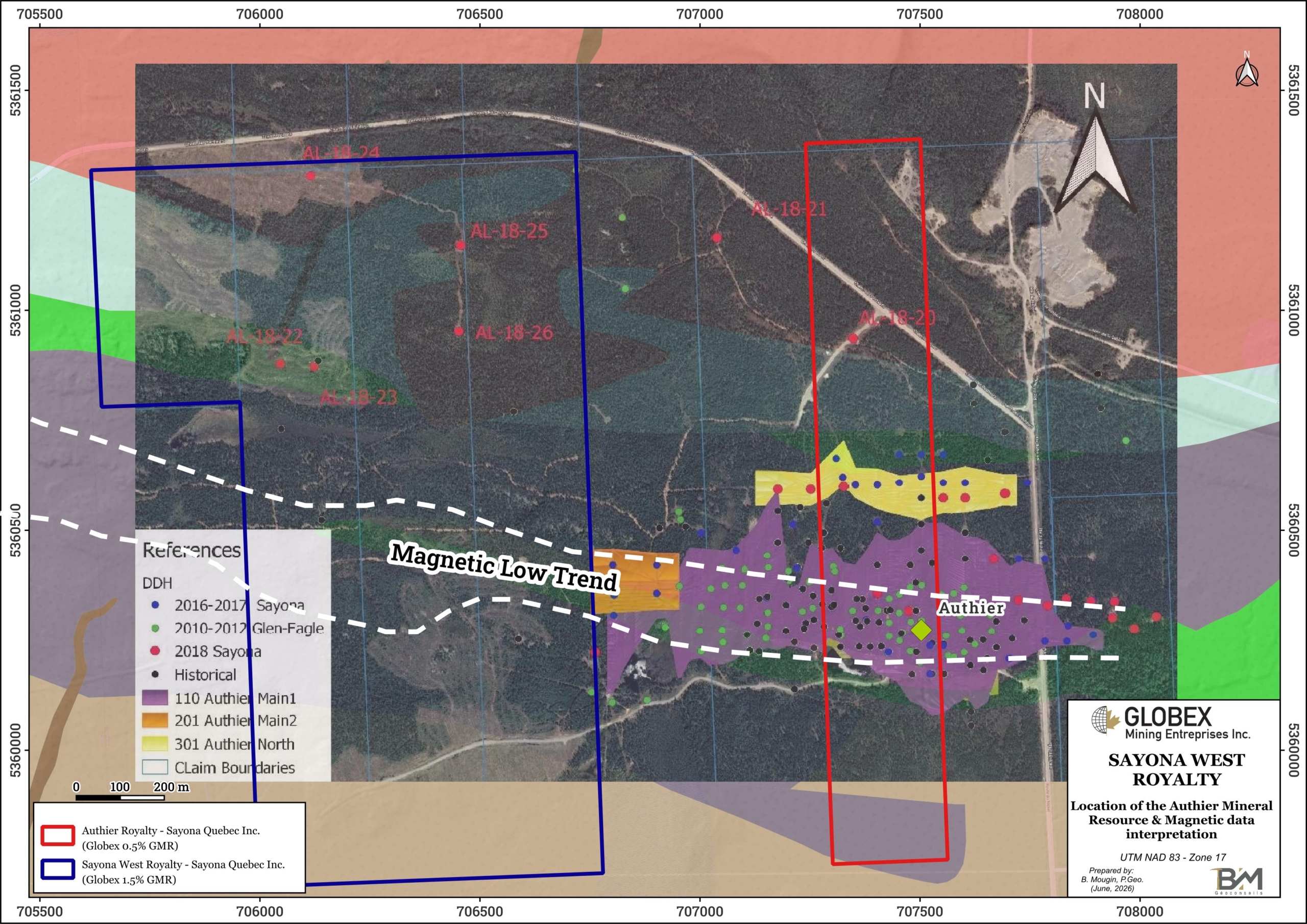
Globex’s 1.5% Gross Metal Royalty claims are currently located west of the mineral reserves but the property has not been thoroughly explored yet and the mineralized zones are still open laterally in direction of the Sayona West property.
Resources and Potential
The Authier Lithium deposit which hosts Mineral Reserve of 11.2 Mt @ 0.96% Li2O is located immediately east of the Sayona West property. The spodumene-bearing pegmatites are oriented ESE-WNW within a low magnetic corridor that extends westward from the deposit onto the Sayona West property.
Limited historical work has been undertaken directly on the Sayona West property in the past, with only 26 DDH (2,722.19 meters). Therefore spodumene pegmatites are still likely to be discovered and Mineral Reserve of the Authier Lithium deposit could be extended to the west on Globex 1.5% GMR claims with additional DDH.